The Hidden Toll of Hard Ground
Every stride on firm terrain sends shockwaves racing up a horse's leg. Limb concussion—those jarring forces from hoof strike—can reach three to four times the horse's body weight. For performance horses logging serious miles, this adds up fast, stressing joints, tendons, and bones.
AquaTreads flip the script. By submerging limbs in water, they slash impact forces dramatically.
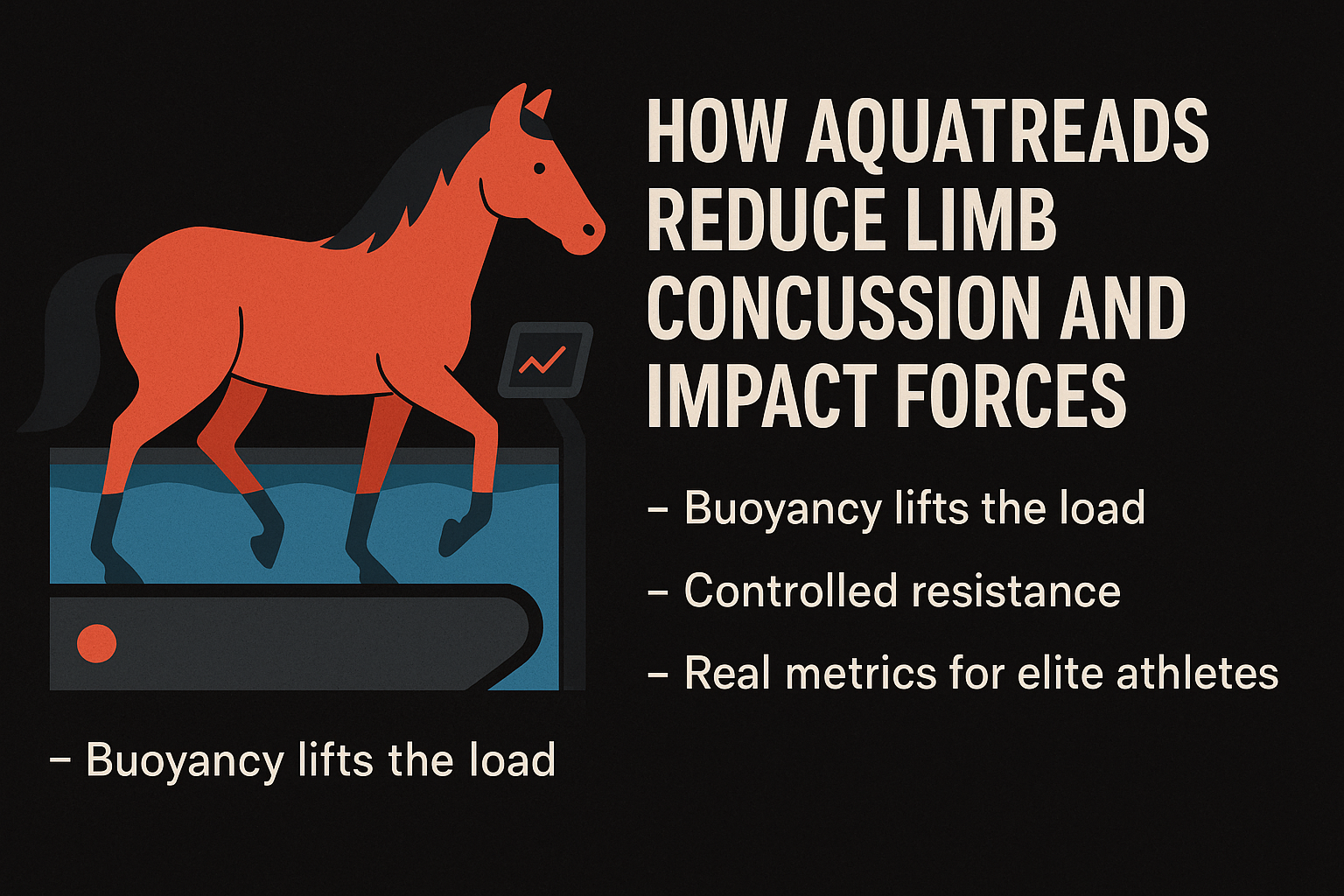
Buoyancy Lifts the Load
Water's buoyancy acts like an invisible cushion. A horse standing chest-deep experiences up to 90% body weight reduction on the limbs. No more pounding pavement.
Studies on equine treadmills show peak ground reaction forces drop by 40-60% in water versus dry land. That's not guesswork—it's biomechanics at play. The horse moves freely, but each step lands soft, preserving cartilage and ligaments over time.
Controlled Resistance, Zero Wreckage
Water doesn't just soften blows; it adds purposeful resistance. As legs push through the current, muscles engage without the brutality of dirt or arena footing.
Trainers notice horses return stronger post-AquaTread sessions. Limbs rebuild resilience. Concussion-related microtrauma? Minimized. Think of it as rehab disguised as a workout—playful power without the punishment.
Real Metrics for Elite Athletes
- Joint Stress: Reduced by half in controlled trials.
- Tendon Strain: Lower loading rates prevent overload.
- Recovery Time: Faster bounce-back for high-end performers.
For vets monitoring suspensory health or fetlock wear, these numbers matter. AquaTread data often reveals symmetric gait improvements, signaling balanced force distribution.
Incorporate this into routines wisely: start slow, monitor stride length. Horses adapt, emerging tougher against everyday impacts.