Why Horse Backs Deserve a Closer Look
Horses carry their worlds on their backs—literally. From saddles to spines, the equine back is a marvel of motion, flexing and extending with every stride. But when biomechanics go awry, performance plummets and injury lurks.
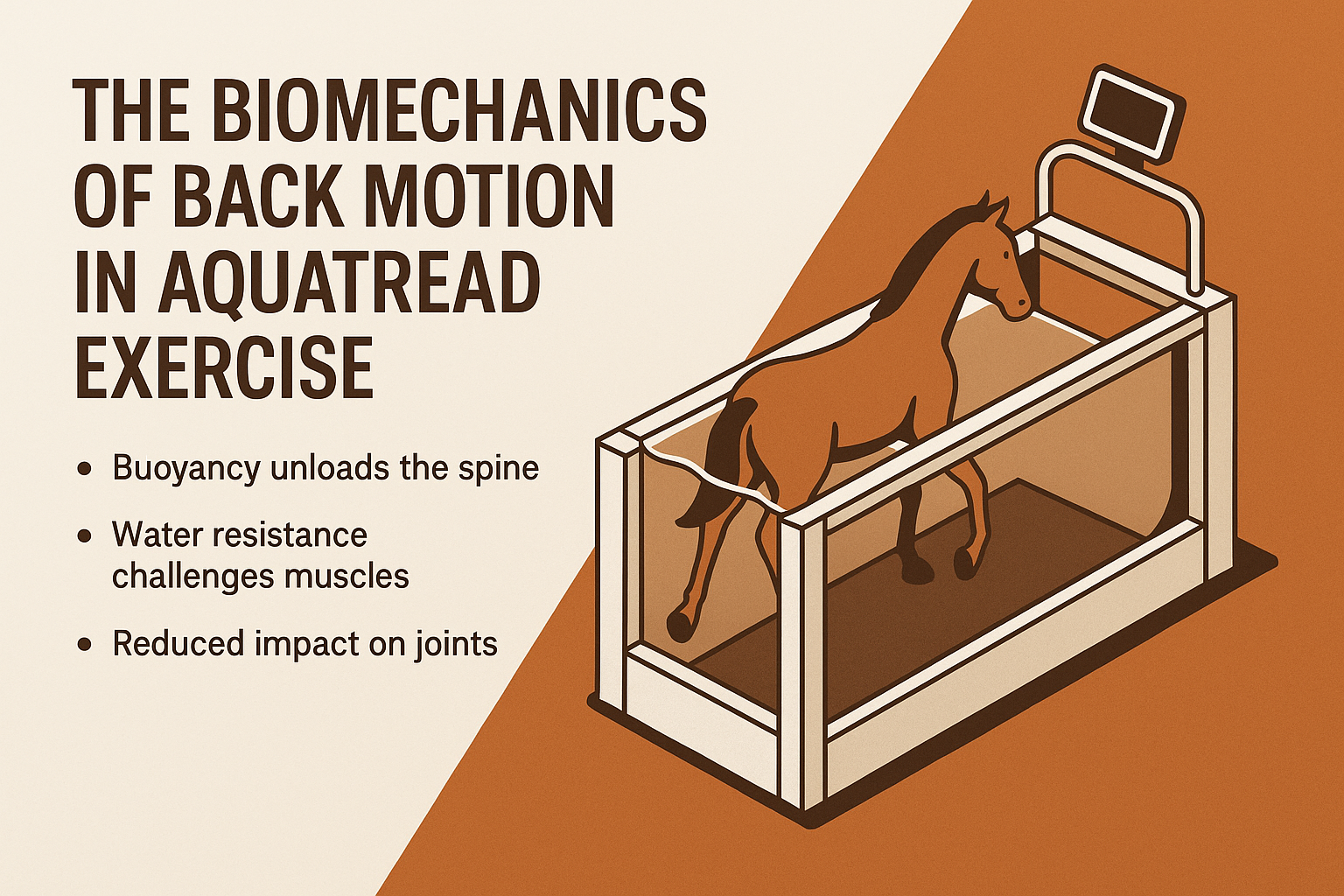
Aquatread exercise changes the equation. Buoyancy unloads the spine while water resistance challenges muscles differently. Let's dissect how this underwater treadmill reshapes back dynamics.
The Basics of Equine Back Mechanics
Picture the horse's back as a suspension bridge. Key players include the longissimus dorsi muscles, thoracic vertebrae, and the thoracolumbar junction. In overground movement, gravitational forces compress the spine, demanding precise coordination between flexors and extensors.
Extension happens during propulsion; flexion aids swing phase. Disruptions—like kissing spines or muscle atrophy—lead to asymmetry. Vets see this in gait analyses: uneven topline engagement spells trouble for jumpers or cutters.
Aquatread's Buoyant Intervention
Step into the AquaTread pool, and physics flips. Water supports up to 90% of body weight at chest height, slashing vertebral compressive loads. This lets the back move freer, without the full brunt of gravity.
Muscles fire differently too. The water's viscosity adds drag, promoting slower, controlled reps. Horses often show improved lumbar flexion early on—think of it as back yoga with horsepower.
- Reduced Impact: No jarring landings; spine decompresses naturally.
- Enhanced Range: Buoyancy encourages greater thoracolumbar flexion, up to 20% more in some studies.
- Muscle Recruitment: Epaxial muscles engage steadily, rebuilding symmetry.
Real-World Back Gains
Trainers notice it first: that subtle lift in the topline after sessions. For rehabbing cases, like post-kissing spines surgery, Aquatread rebuilds motion without overload. One world-class eventer returned to competition after 8 weeks, back suppling like never before.
Biomechanically, stride lengthens as the back swings freer. Sensors on research treads capture it: peak extension moments align better, reducing compensatory hindquarter strain. It's not magic—it's targeted hydrotherapy.
Short bursts work best. Start with 5-minute walks at 1.2 m/s, ramping to trot as flexion improves. Monitor with thermography; cooler backs signal balanced loading.
Common Pitfalls and Pro Tips
Not all backs respond identically. Young horses might over-flex initially; older ones guard motion. Watch for tail swishing—early fatigue cue.
Pro tip: Pair with ground poles post-session to lock in gains. Vets, integrate flexure cycles: 2 minutes walk, 1 minute trot, repeat. Data from instrumented treadmills backs this sequencing for optimal thoracolumbar ROM.
Moving Forward with Informed Motion
Aquatread isn't a cure-all, but its biomechanics edge makes it a powerhouse for back health. Performance horses thrive when spines stay supple. Next time your equine athlete steps on the mill, appreciate the science swimming beneath the surface.