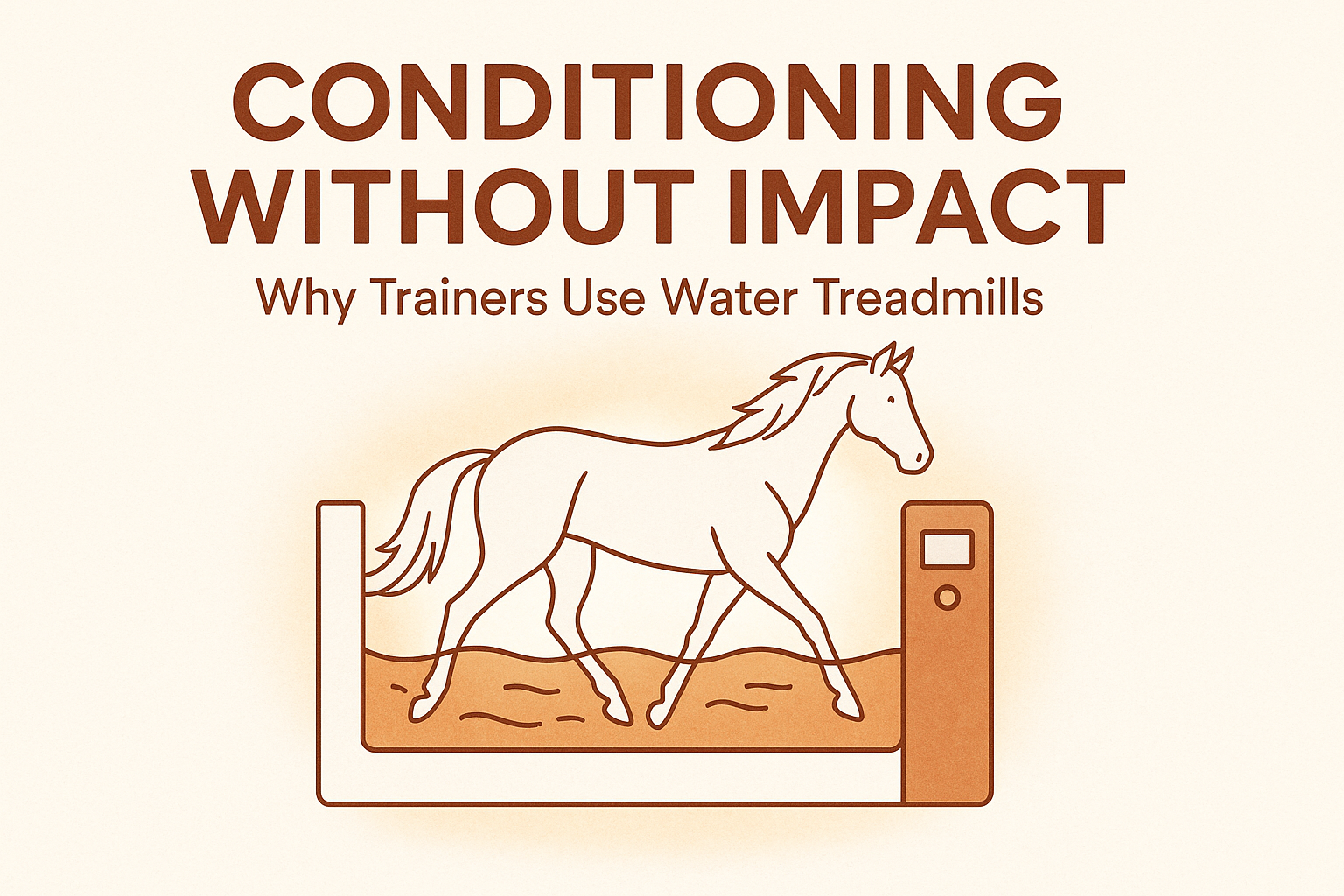
Picture this: your elite reiner powering through slides and spins, but sidelined by hock strain. Traditional treadmill work builds fitness, but the pounding risks more damage. Enter water treadmills—game-changers for impact-free conditioning.
Cardio Boost Without Joint Stress
Water resistance amps up heart rates like dry-land gallops, yet buoyancy slashes ground reaction forces by up to 60%. Studies on equine athletes show VO2 max improvements rivaling high-speed workouts, minus the concussion.
Horses hit aerobic peaks faster. Trainers dial in resistance with water depth, targeting endurance without overtaxing pasterns or stifles.
Muscle Development, Horse-Style
Resistance training in water recruits fast-twitch fibers across the topline and hindquarters. Forward propulsion against currents mimics hill work, sculpting glutes and hamstrings crucial for disciplines like cutting or eventing.
- Proximal suspensories strengthen without stretch overload.
- Core engagement stabilizes under variable drag.
- Flexor chains fire symmetrically, curbing asymmetries.
Results? Measurable girth gains in 4-6 weeks, per ultrasound metrics from performance vets.
Discipline-Specific Protocols
Dressage pros favor shallow water for cadence drills, emphasizing straightness. Jumpers opt for deeper tanks to build bascule power. Barrel racers fine-tune turns with angled inclines.
Customize speed and depth: 1.2-2.2 m/s for trot intervals, 20-40 minutes sessions. Monitor with heart rate monitors—aim for 140-160 bpm zones.
Rehab to Peak Performance Transition
Post-injury, water treadmills bridge rehab to full work. Start submersed at walk, progress to canter as proprioception rebuilds. Vets note 30% faster return-to-athlete timelines versus stall rest alone.
Not a cure-all. Pair with farrier tweaks and diagnostics. But for preserving careers in high-stakes arenas, it's precision tooling.
Trainers swear by it: conditioned horses that turn heads—and win—without the wear and tear.