The Layoff Hangover: Why Rushing Back Bites
Your performance horse has been sidelined—maybe a tendon tweak, a suspensory strain, or just a strategic rest. Jumping straight back into full gallops risks re-injury. Muscle atrophy sets in after just two weeks off, and cardiovascular fitness drops faster than a loose shoe on a rocky trail.
Aquatic exercise flips this script. Water's buoyancy slashes impact forces by up to 60%, letting you rebuild without the ground pounding joints.
Aquatic Mechanics: Resistance Without Wreckage
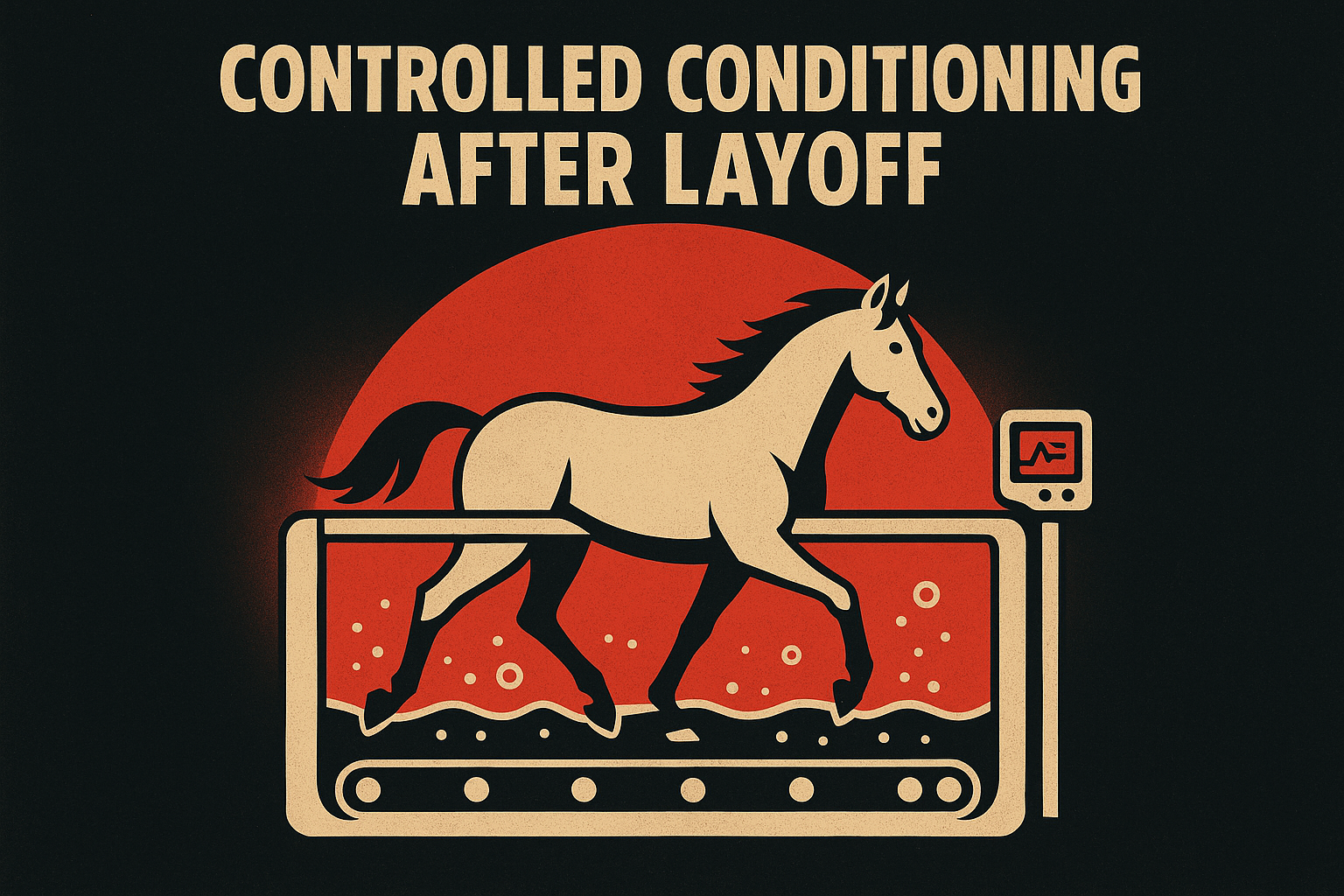
Underwater treadmills deliver controlled resistance. Warm water (around 95°F) relaxes muscles while viscosity provides progressive overload—think swimming against a current tailored to your horse's needs.
Start shallow: chest-deep water minimizes weight-bearing, focusing on proprioception and core activation. Gradually deepen or speed up the treadmill. This metered approach rebuilds topline strength and hindquarter power without the jarring stress of dirt arenas.
Pro tip: Monitor stride length. In water, it naturally elongates, retraining biomechanics lost during layoff.
Phased Protocols That Deliver
Week 1-2: Low intensity, 10-15 minutes at walking pace. Focus on straight-line stability. Vets note improved circulation here, flushing out stagnation.
Weeks 3-4: Introduce trot intervals. Alternate 2 minutes trotting with 1 minute walking. Resistance builds aerobic base; horses often show brighter attitudes by session three.
- Track heart rate: Aim for 120-140 bpm peaks.
- Video sessions: Spot asymmetries early.
- Pair with flexions: Enhance ROM without rider weight.
By week 6, introduce inclines for hill-work simulation. Endurance climbs, and that lean muscle returns—safely.
Evidence in Motion
Research from equine sports medicine journals backs this: horses post-layoff using aquatic therapy return to work 20-30% faster than dry-land only rehab. Trainers report fewer setbacks, with one study showing 85% success in full recovery without flare-ups.
It's not magic. It's physics: neutral buoyancy preserves joint health while hydrostatic pressure aids lymphatic drainage.
Finish Strong, Stay Sound
Controlled conditioning via aquatic exercise isn't a shortcut—it's the smart path. Integrate it post-layoff, and your high-end athlete bounces back sharper. Listen to your horse's feedback, collaborate with your vet, and watch the transformation unfold—one buoyant stride at a time.