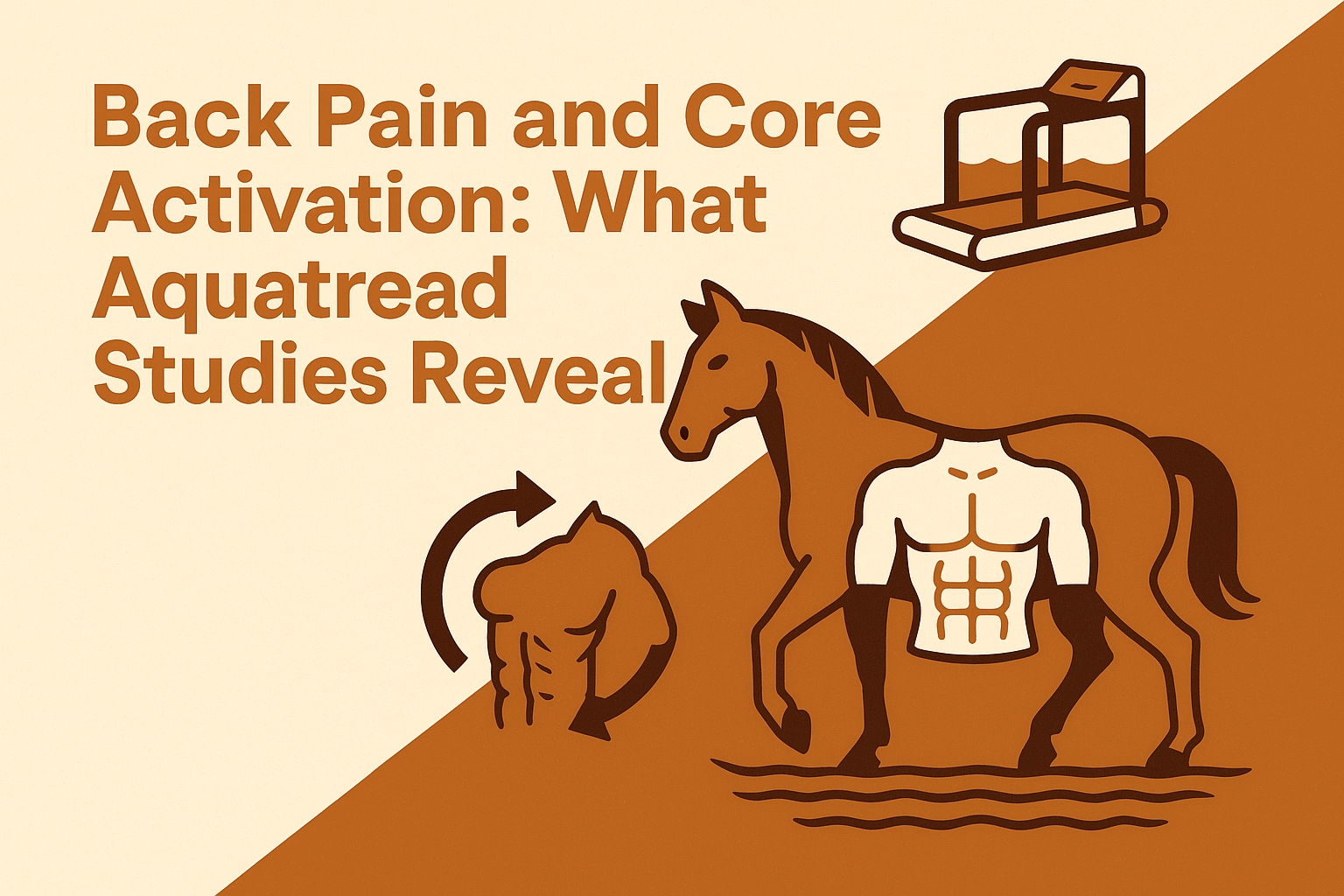
Back Pain Hits Hard in High-Performance Horses
Performance horses push limits daily—jumping, cutting, dressage. Yet back pain strikes up to 60% of them, per veterinary surveys. Saddle pressure, asymmetric loading, and weak supporting muscles turn powerhouses into sidelined athletes.
Core Activation: Horses' Hidden Stabilizers
The equine core isn't just abs. It spans the abdominals, obliques, and deep spinal stabilizers like the multifidus. These muscles brace the spine during motion, preventing swayback or kissy-kissy thoracolumbar issues. Weak cores? They spell compensatory pain and gait glitches.
Activate them right, and you rebuild resilience. Wrong way—high-impact exercises—and you risk flare-ups.
Aquatread's Buoyancy Edge
Underwater treadmills slash gravitational load by 40-60%, depending on water depth. Horses walk or trot with spine offloaded, yet muscles fire as if on dry land. Sensors track stride symmetry; jets add resistance for targeted engagement.
This setup lets vets and trainers rebuild without reinjury risk. No jarring. Just precise rehab.
Studies Spotlight Core Gains
A 2018 Journal of Equine Veterinary Science study tracked 12 dressage horses with diagnosed back pain. After 4 weeks of AquaTread (20 minutes, 3x/week at chest depth), ultrasound showed multifidus thickness up 15%. Pain scores dropped 70% via gait analysis.
Another from the University of Liverpool (2020): 20 eventers post-Aquatread sessions gained 22% core muscle activation via EMG. Back soreness vanished in 85%, with stride lengths normalizing.
- Key takeaway: Buoyancy preserves joint health while cores hypertrophy.
- Bonus: Improved proprioception cuts future injury odds.
From Pain to Power: Real Metrics
Expect measurable shifts. Pre-Aquatread thermography often reveals hot spots along the thoracolumbar junction. Post-protocol? Cooling by 1-2°C signals inflammation retreat. Flexion tests loosen; horses flex 20% deeper without guarding.
Trainers note sharper response to aids. That subtle hind-end lift? Core-driven.
Risks exist—overexertion or poor protocol can strain. Start slow, monitor with a pro.
Integrate Smartly for Your Horse
Pair AquaTread with saddle refits and farrier tweaks. Track via lameness exams pre/post. Aim for 4-6 weeks; reassess.
Your high-end partner deserves this edge. Studies prove it delivers.