Rehab Realities for Elite Equine Athletes
Performance horses push limits daily. Suspensory strains, hock issues, and soft tissue injuries sideline even the toughest competitors. Traditional rehab—stall rest, hand-walking, controlled exercise—works, but it's slow and risks re-injury.
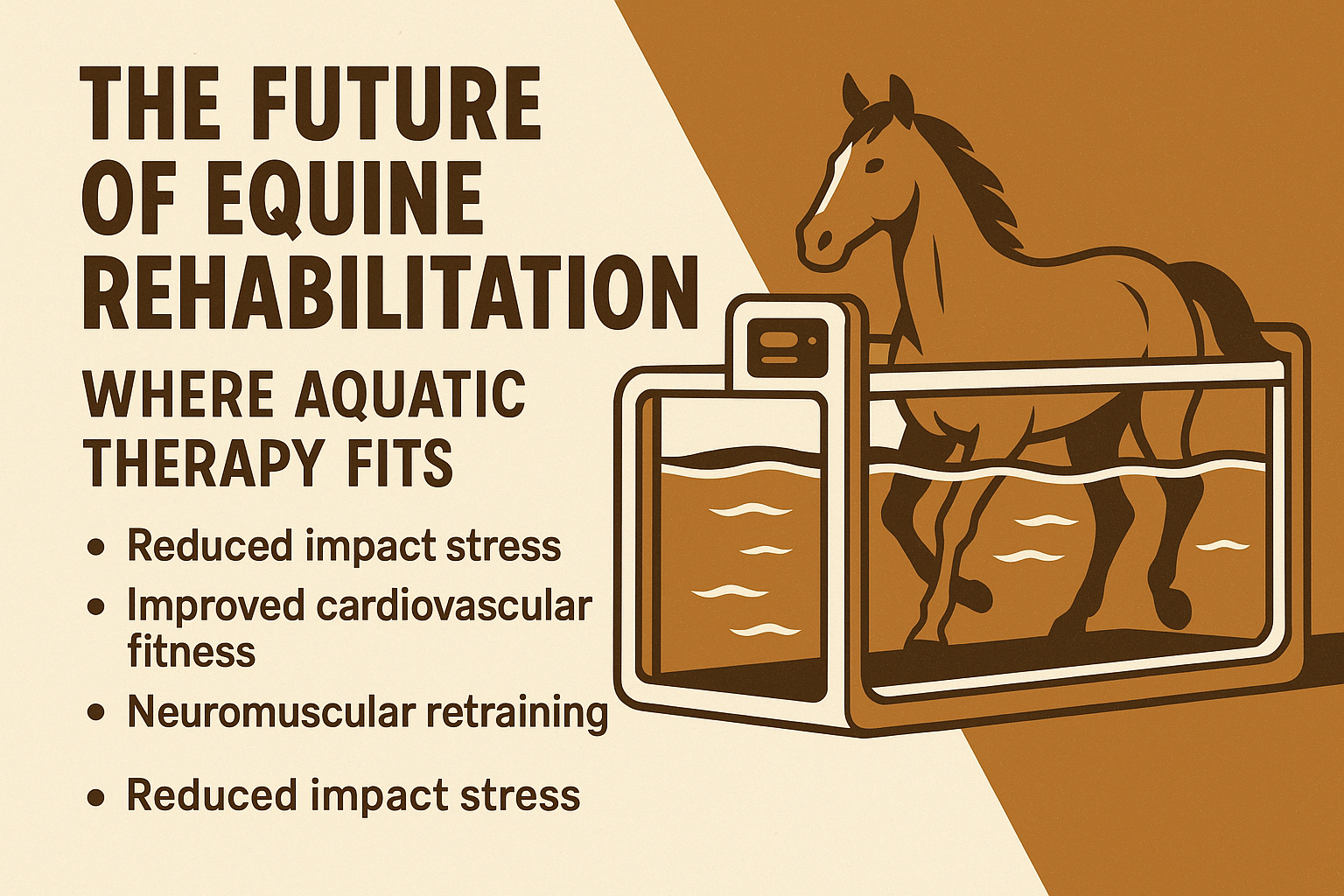
Aquatic therapy flips the script. Horses tread water on underwater treadmills, offloading up to 60% of body weight. Joints move freely, muscles engage without pounding. It's not magic; physics makes it effective.
Trends Shaping Tomorrow's Protocols
Regenerative medicine surges forward. Stem cells, PRP injections, and laser therapy gain traction. Wearables track biometrics in real-time—gait analysis via sensors, inflammation markers from blood panels.
AI enters the arena, predicting injury risks from training data. Vets integrate genomics for personalized recovery plans. Yet these tools amplify, not replace, foundational rehab.
Aquatic therapy slots in perfectly here. Post-injection, horses rebuild strength hydrostatically. Sensors monitor progress underwater, feeding data to AI models. It's the low-impact bridge from acute care to full work.
Evidence Builds a Strong Case
Studies on Thoroughbreds show aquatic treadmill work cuts recovery time for tendon injuries by weeks. Dressage horses regain symmetry faster, with less scar tissue. One trial tracked barrel racers: 80% returned to competition within three months, versus six for land-based rehab.
- Reduced impact stress preserves healing tissues.
- Improved cardiovascular fitness without overload.
- Neuromuscular retraining mimics natural gait patterns.
Risks? Minimal when protocols match the horse. Overuse leads to fatigue; poor technique strains the back. Pros mitigate with gradual intros and vet oversight.
Practical Integration for Trainers and Vets
Start with 10-minute sessions, twice weekly. Pair with shockwave for navicular cases or ozone for laminitis recovery. Monitor via ultrasound pre- and post- to quantify progress.
World-class programs already blend it: FEI eventers use aqua treads between phases. Polo ponies rehab mid-season, staying sharp. Forward thinkers schedule around AquaTread availability in spots like Rio Verde.
Customization rules. A jumper with DJD needs slower speeds; a reiner builds sprint intervals submerged.
The Horizon: Seamless, Data-Driven Rehab
Aquatic therapy isn't a standalone fix—it's the future-proof core. As equine sports demand peak performance longer, expect hydro-rehab in every top barn. Vets will prescribe it like bute, trainers will demand it like arena time.
Horses heal smarter. Careers extend. The edge goes to those who adapt first.