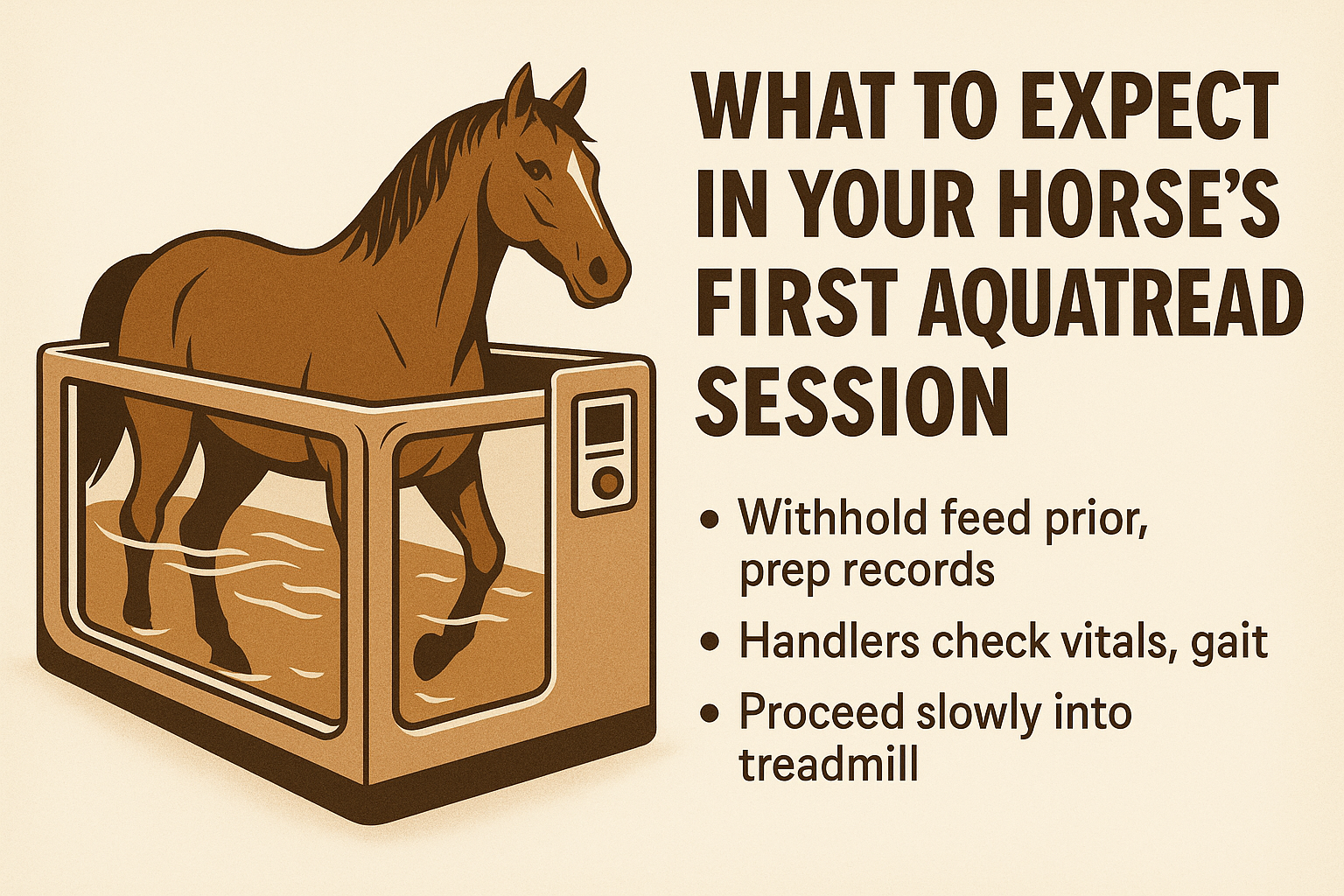
Pre-Session Prep: Set the Stage
Your horse arrives calm and ready. Withhold feed for 4-6 hours beforehand to minimize digestive upset during movement. Ensure hooves are clean and trimmed—no fresh shoes if possible, as the treadmill belt grips barefoot best.
Bring records: recent vet notes, injury history, or performance logs. This helps tailor water depth and speed precisely.
Arrival and Initial Assessment
Handlers check vitals—heart rate, respiration, temperature. A quick gait analysis on dry ground reveals asymmetries. Your input matters: note any quirks like trailer stress or water aversion.
Most horses eye the tank curiously. A few snort at the sloshing water. Staff introduce it gradually, often with a familiar lead rope.
Entering the Tank: The First Dip
The treadmill fills to chest height, buoyancy reducing weight by up to 60%. Your horse steps onto the belt via a ramp. Water supports joints immediately, easing that first stride.
Expect hesitation. Some paw or spin; pros use voice cues and gentle pressure. Once moving, forward momentum kicks in. Speeds start slow—1-2 mph—building as comfort grows.
During the Session: Rhythm and Response
Sessions last 15-30 minutes, split into warm-up, work, and cool-down. Watch for engagement: ears forward, steady breathing signal adaptation. Water jets massage muscles, promoting circulation without overload.
Trainers spot subtle shifts—improved hind-end push or relaxed shoulders. If resistance lingers, depth adjusts shallower. Hydration breaks prevent overheating; monitors track every metric.
- Common reactions: Initial balking (90% resolve in minutes).
- Rare stalls: Handlers exit calmly, retry next day.
Post-Session: Recovery Starts Here
Toweling off, then a quiet stall rest. Offer electrolytes and small hay feeds. Mild soreness is normal but rare; monitor for 24 hours.
Next-day strides often show gains—freer movement, less stiffness. Log observations for progressive sessions. Consistency builds trust; many elite performers thrive after 3-5 visits.
Pro Tips for Success
Desensitize at home: hose legs daily. Positive reinforcement speeds buy-in. For spooky types, mirror placements distract effectively.
Track progress quantitatively: stride length, symmetry scores. Vets appreciate data tying AquaTread to faster returns to peak form.