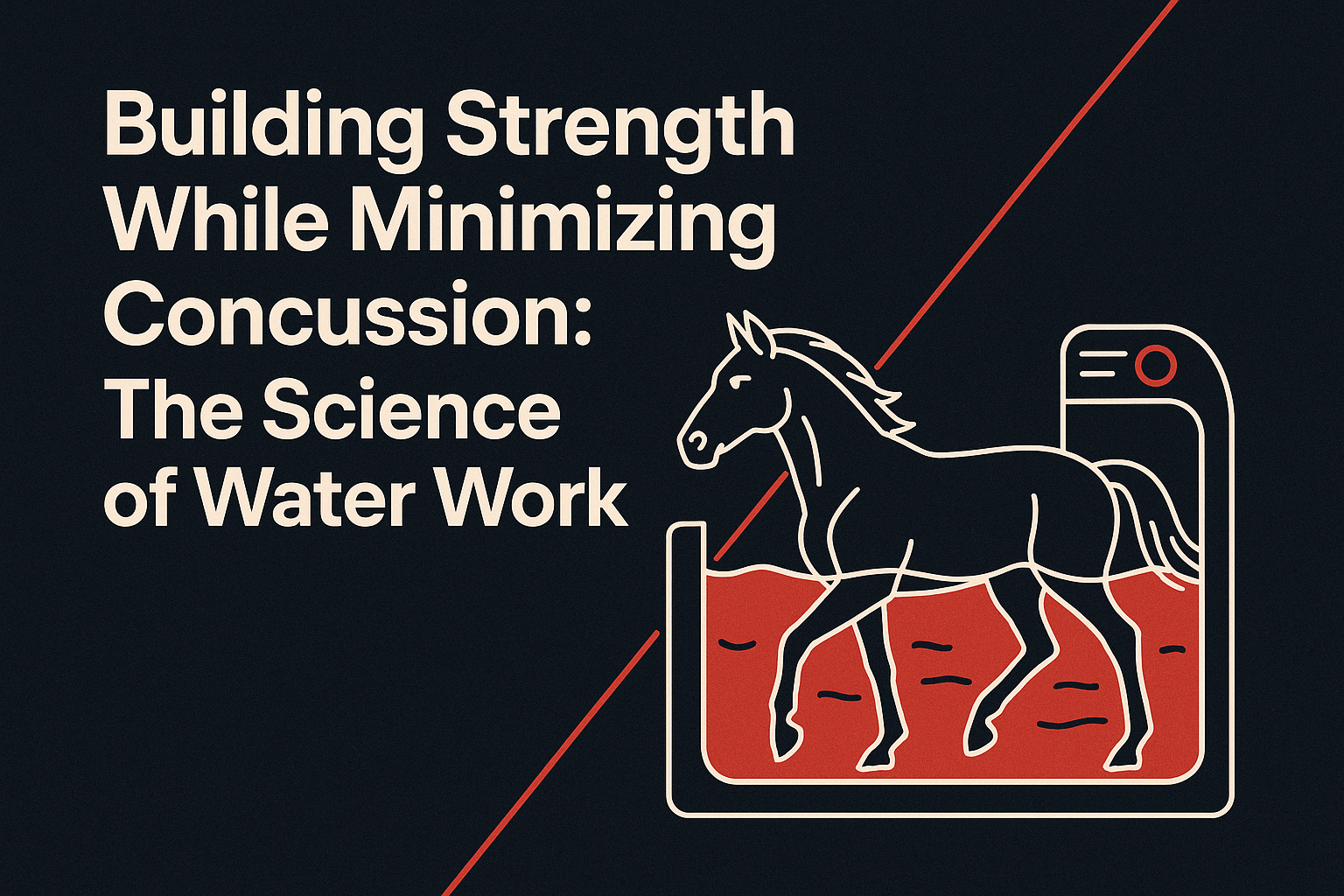
Horses pounding arena surfaces day after day build strength—but at a cost. Each stride delivers jarring concussion forces to joints and tendons, accelerating wear in performance athletes.
The Physics of Impact in Equine Training
Concussion refers to the repetitive shock waves traveling up a horse's limbs during weight-bearing exercise on firm ground. Studies from the University of Bristol quantify these forces: peak loads can hit 1.5–2 times body weight per stride in trotting horses. Over sessions, this cumulative stress contributes to microtrauma in cartilage and bone, even in sound animals.
Water changes everything.
Buoyancy: Offloading Without Losing Gains
Submerging a horse in an AquaTread up to chest height slashes effective body weight by 40–60%, depending on water depth. This buoyancy unloads joints while gravity still demands muscle activation. Horses maintain stride length and frequency, recruiting core and hindquarter muscles more intensely to propel against reduced weight.
Result? Strength builds without the ground reaction forces that hammer pasterns and fetlocks.
Resistance Training, Aquatic Style
Water's viscosity provides proportional drag—slow speeds emphasize endurance, faster ones amp up power. Research in the Journal of Equine Veterinary Science shows aquatic treadmill work increases gluteal and semitendinosus muscle girth comparably to land-based interval training, but with 70% less peak joint stress.
- Controlled progression: Start at walk, 10–15 minutes, depth-adjusted for fitness level.
- Monitor response: Ultrasound metrics reveal reduced inflammation markers post-session.
- Versatile application: Ideal for rehabbing suspensory strains or prepping for show season.
Neuromuscular Edge
Beyond mechanics, water work sharpens proprioception. Unstable footing cues from swirling currents force constant micro-adjustments, enhancing balance and coordination. Vets note quicker return-to-work timelines in cases like dorsal metacarpal disease, where controlled loading prevents overload.
It's not zero risk—poor protocol can lead to muscle soreness—but dialed-in sessions sidestep common pitfalls.
Practical Protocols for Peak Performance
For elite eventers or jumpers, integrate 2–3 water sessions weekly. Pair with land work: 20 minutes AquaTread at rising trot mimics hill work's hind-end engagement sans concussion. Track via gait analysis apps; expect 10–15% stride efficiency gains over 4–6 weeks.
Trainers swear by the mental reset too—horses exit calmer, focused. Science backs the build: stronger topline, resilient limbs, all from waves instead of pounding dirt.