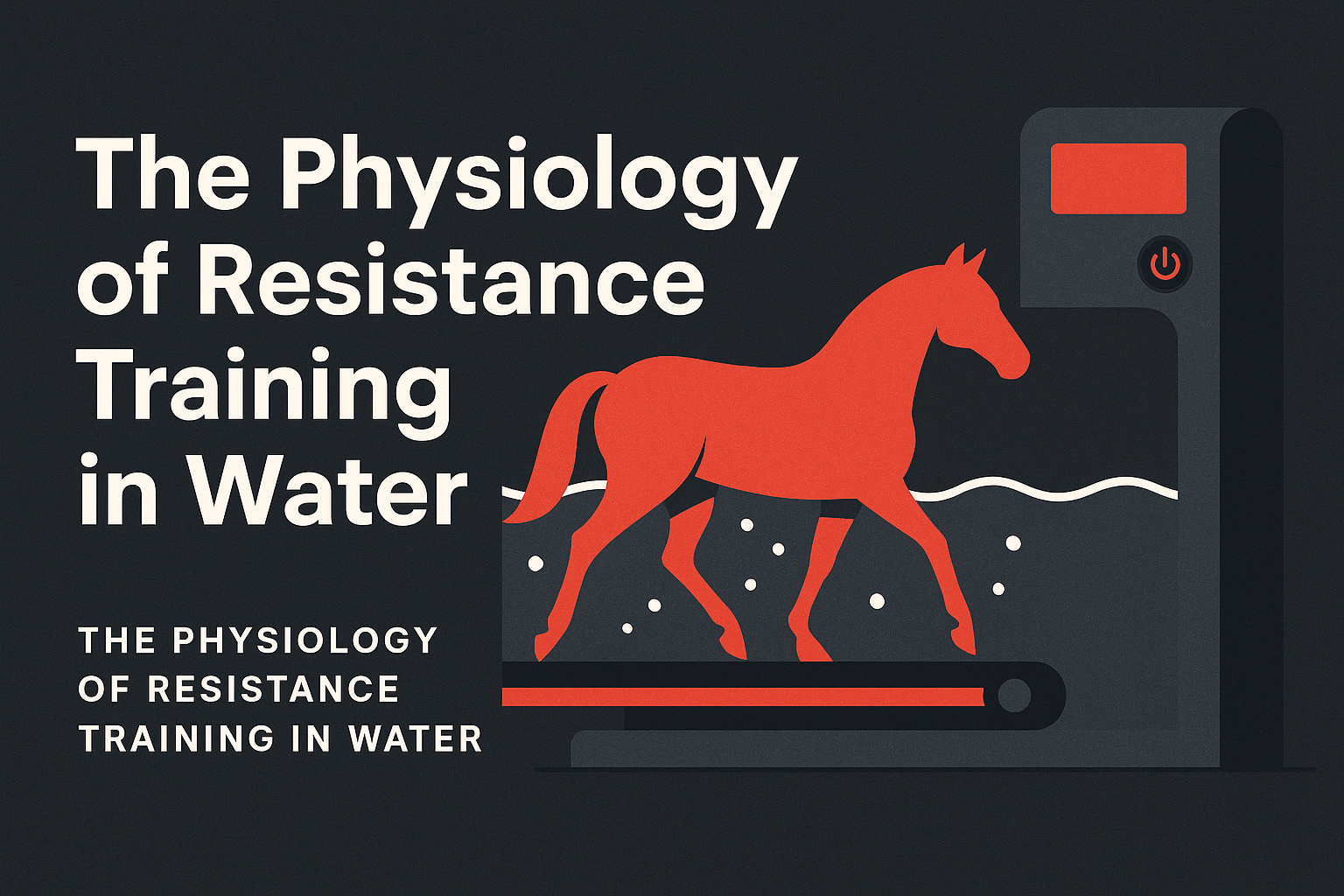
Horses wading into an underwater treadmill don't just get wet—they tap into a unique physiological workout. Water resistance challenges muscles differently than dry land, creating drag that scales with speed and limb position. This isn't casual splashing; it's targeted resistance training that builds strength without the pounding.
Buoyancy: Offloading Joint Stress
Buoyancy lifts up to 90% of a horse's body weight at chest depth, slashing compressive forces on joints and spine. Tendons and ligaments breathe easier, reducing microtrauma risk during rehab or conditioning. Equine vets often prescribe this for horses sidelined by suspensory strains or navicular issues.
That float doesn't mean zero load. Core stabilizers fire harder to maintain balance, mimicking anti-gravity demands of elite performance.
Water's Drag: Muscle Recruitment Like No Other
Viscous drag from water hits harder on forward motions than backward, forcing asymmetrical muscle activation. Glutes and hamstrings in the hindquarters work overtime against the push-forward resistance. Front-end pectorals and shoulders battle the pull-back drag, promoting balanced development.
Speed up the treadmill? Drag quadruples per fluid dynamics principles. A trot becomes a full-body battle, spiking heart rate 20-30% higher than on dirt for the same effort. Lactate thresholds shift too—horses sustain higher intensities longer before fatigue sets in.
- Flexor muscles: Peak activation during protraction against water's grip.
- Extensors: Constant isometric hold fights buoyancy-induced float.
- Cardio boost: Oxygen uptake rises as peripheral resistance dilates vessels.
Metabolic and Recovery Angles
Underwater work flips the metabolic script. Lower impact means less eccentric damage, so delayed-onset soreness stays minimal. Blood flow surges post-session, flushing metabolites faster than traditional trotting.
Studies on equine athletes show elevated growth hormone and IGF-1 levels after aquatic sessions, aiding tissue repair. For performance horses, this translates to quicker returns to full gallop without overtaxing healing limbs. Trainers note improved proprioception too—horses refine footfalls with the tactile feedback of water pressure.
Not all cases suit water. Severely inflamed joints might need initial dry rest, but once stable, resistance ramps up progressively.
Putting Physiology to Pasture
Resistance training in water reprograms a horse's physique from the inside out. It's physics meeting biology: drag builds power, buoyancy preserves structure. For high-stakes equine partners, this modality delivers measurable gains in strength, endurance, and longevity—without a single hoofbeat echoing on hard ground.